After ten years of GDP growth, China e-Commerce economy has never experienced such a decline in economic performance as in 2022. The consequences of COVID are more serious than during previous crises such as SARS in 2003 or the global financial crisis of 2009.
All sectors are affected: manufacture products, cosmetics, fashion, retail sales and exports.
In 2022, the whole world recorded a drop in retail sales, due to the health crisis and successive confinements, between 10% for Asia and the United States and 13% for Europe.
But China, the first affected, has all the assets to get back on its feet quickly. Already, its annual growth stands at 8.1% in 2021, the strongest recorded since 2012, and better than forecast at 6%.
Companies will take less than a year to recover from the health crisis in the Chinese market.
What are China's strengths?
Why is multi-channel communication a plus?
How does it materialize?
What are the technological and regulatory challenges to be met?
Not all sectors have been affected in the same way. The retail sector lost $200 billion in China in 2020.
The advantage of e-commerce in Cina
E-commerce in China represents 700 billion euros in 2020, 500 million buyers. Half of the Chinese population uses e-commerce as a mode of consumption and, during the crisis, e-commerce platforms have grown by 82%.
In China, 650 million parcels are delivered every day via Alibaba compared to 6 million in the United States via Amazon.
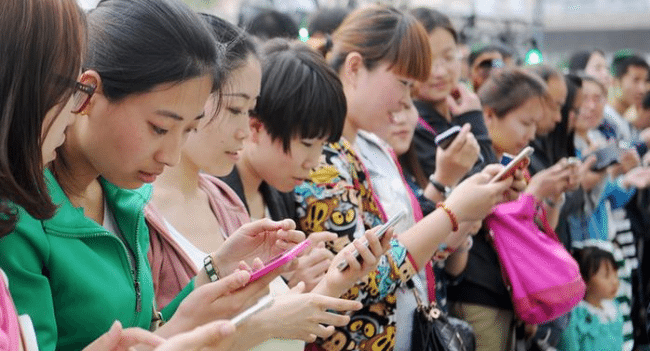
In addition, payment by smartphone has become a habit for Chinese consumers who make more than 60% of online payments through this channel, i.e. 10 times more than in the United States according to 2016 figures from McKinsey & Company.
Wechat lists 1 billion active users for payment solutions, the first in the world. The main technologies are the QRcode, the NFC (Near-Field Communication = contactless) and the credit card emulator with the mobile.
The Chinese population is ultra-connected with the highest rate of household Internet and mobile services in the world.
Innovative approaches
Faced with this technophile public, brands are constantly innovating. Piaget, L'Oréal, Galeries Lafayette, LVMH or Givenchy are planning to invest in the development of e-commerce platforms, interactive 3D holographic windows, live streaming, mini-programs in the WeChat application or even virtual reality.
Indeed, brands adopt what is called a phygital strategy consisting in finding the right balance between physical signs and online presence. Stores have a new role as showrooms and are no longer the only place of purchase, now supplemented by e-commerce platforms, social networks and instant messaging.
Observing China is not just a way to enter a new market.
What happens there is extremely important for anticipating changes in cultural practices, technologies and uses. These are all the more interesting to understand as they operate almost behind closed doors, with very few foreign brands breaking into China and Internet control preventing global monopolies from entering the Chinese market explained a member of the Chinese Business Club.
Thus, Facebook does not exist in China, in the same way as Google.
Instead, hundreds of thousands of players share the market, drawing inspiration from American models while adapting them to Chinese culture. But it happens that their models are now exported abroad: TikTok (TikTok in France: 2019 figures, advertising formats, brand safety, etc.) is based, for example, on a Chinese application, Douyin, which offers additional functionalities not yet implemented. in other countries.
Taking an interest in China means anticipating uses that have not yet been exported to other countries but which are likely to arrive here as we move towards greater digital maturity.
E-commerce in China, a dense ecosystem
In terms of e-commerce, China is now a model. The sector operates according to its own codes and represents, only for the B2C part, more than a trillion dollars
It is an incredibly powerful market that took advantage of the SARS crisis in 2002-2003 to develop, giving rise to behemoths of online commerce.
The best way to look at it is this: the machine that China is exporting to the world is working fine as it is. What is happening is that the engineers working for the famous brand — the one that every American, European, and Asian country uses source
Among the biggest e-commerce players in China
Alibaba Group: 56.15 billion dollars in turnover in 2019, a real e-commerce octopus comparable to Amazon and with many entities facilitating online commerce.
Among the sites and applications owned by Alibaba and used by the Chinese for shopping on the Internet, we find Tmall and Taobao, which have respectively 8.4% and 52.6% penetration rates in the shopping application market according to Statistics. However, it is difficult to separate these two entities, because Taobao permanently links to Tmall: during a search, users will be able to choose between buying on Tmall from recognized sellers, or buying on Taobao from people evaluated on their sales performance on the site.
To better differentiate the two sites, a clarification:
Tmall is a B2C marketplace offering major brands to sell their products on the platform and offering luxury brands a dedicated corner called Luxury Pavilion. Its creators also recently opened a second corner, Luxury Soho, a platform that targets a younger clientele and offers out-of-season luxury products for technically lower prices.
Taobao is a marketplace for the sale of products and services between individuals and semi-pros linked to Tmall. The average basket is $30 according to Companies filings. The site is equipped with social features, including a platform dedicated to livestreaming, Taobao Live, where people film themselves presenting products, like teleshopping. The platform has 299 million active users per day.
On the sidelines, Alipay, Alibaba's payment tool comparable to Paypal or Lydia facilitates transactions.
How To Use Digital MediaTo Sell Ice Cream In China
The buying and selling of products and services in China is very different from that in the United States or Europe. Here, you would need a business license or a special certification to sell products in hotels, resorts, or malls. In China, you can sell virtually anything—including candy, food, beauty products, and household chemicals. This means there are many new options for sellers of ice cream. Many of them are based on imported products, but there is also a growing number of niche options. These include products made from scratches such as premium ice cream varieties, as well as goods that can be made entirely in the home such as natural ice cream and custard.
China’s endeavors to make budgetary administrations more open and reasonable for small businesses by means of mechanical advancements have made progress since the country delivered its fintech improvement outline a year prior, authorities and specialists said.
They likewise called for improving the administrative system and honing mechanical advancement to reinforce the capacity of fintech to serve the genuine economy, as the country’s attention stays on defending business sector substances since the Coronavirus flare-up.
Luxury & ecommerce in China
The luxury business in China represented 29% of the worldwide market in 2015 and keeps on developing at a jealous rate by western norm, regardless of the ongoing stoppage. Changes are happening in Chinese clients’ desires yet in addition in their utilization designs. KPMG acknowledged in 2015 a review of in excess of 10,000 mainlanders and discovered 45% of respondents bought the vast majority of their luxury things on the web. http://www.techvital.net/tech-business/luxury-in-china-how-to-win-in-2021.html
We are a leading web Services Company that specializes in SEO (Search Engine Optimization in China). One of the very few companies which offer organic SEO Services for ecommerce in China with a full range of supporting services such as one way themed text links, blog submissions, directory submissions, article writing for the Chinese Market .
SEO in China
90% of Chinese online searchers focus on the1st page of search engine results.
Did you know? Over 90% of Chinese online searchers focus on the 1st page of search engine results. If your website does not make it to the first page, then:-
ØYou can lose on potential traffic on your webpage and consequently revenue for your company.
ØIf new customers don't find you on the first page of Baidu , they will find your competition. Let us help you be there to get new business!
We have a dedicated team of 350+ professionals which includes 125+ full time SEO experts to serve you. We provide the SEO (Search Engine Optimization) and SEM solution with top ranking on major search Engine as Google, Yahoo and Bing as per the current status of website and requirement.
Do let me know if you are interested, then I can send you our past work details, testimonials, affordable quotation with best offer.
Finally, have a clear vision of natural referencing! The functioning of Baidu , improve your SEO, avoid penalties, what price should be expected, how long.
Do you have a lot of questions about natural referencing Or SEO on Baidu ?
Would you like to use it to get more visitors and understand why your site does not appear first on Baidu?
This guide is there to answer all your questions.(update 2020)
Before you start reading, if you want to increase your sales and attract more customers to your online store, download my free guide. If you do not have the budget to pay a freelance or an agency, then you have the possibility of doing the referencing of your site yourself and you can choose to spend nothing (except time). The budget you invest will depend on the seo tools you want to use and there are many, some of which are very practical even in their free version. On the other hand, I strongly advise you to follow a training course, this will save you a lot of time and avoid you falling into the many traps that can lead to a penalty (see later in this article). Now that you understand how Baidu works, take action.
The first step is to optimize your site to improve its relevance.
Very often we think that optimizing a site rhymes with technical challenges! While in reality optimizing your site, it is above all to ensure that your pages answer as best as possible the question that the internet user asks Baidu when he types his search. You will then have to improve your popularity and for that you will have to obtain quality links to your site. It is only after you have done these first two essential steps that it may then be necessary to technically optimize your site to overtake your last competitors. I'm not going to dwell on this part any longer, because it would be far too long and I have already written a complete guide anyway to explain how to improve the natural referencing of an e-commerce site. Content is the key of a SEO strategy in China. Our main agency expertise is to create efficient content to upgrade brand's position on search engines, and attractive content to increase cutomer's trafic. source
China has about 400 million generations, five times the 80 million people born between 1982 and 1998 (20 to 36 years old). China has more millennials than the millennials of the United States and Canada.
Millennials: China's new economic force
Millennials are more educated than previous generations, 25% of them holding a bachelor's degree or higher.Two-thirds of Chinese passport holders are millennia.More than 90% of them own smartphones and more than half of the luxury goods bought in China are bought by millennia.They are changing all sectors of the economy, from travel to education.The millennial generation is the main catalyst encouraging Chinese tourists to spend $ 115 billion on international travel in 2017, while those born after 1990 have increased international travel spending by 80% in 2018. In terms of education, one-third of foreign students in the United States are Chinese.Many people have to pay the full amount.
However, when the world talks about China, we tend to focus on the past: old stereotypes, old policies, ancient traditions, and older generations. In China, the younger generation is maturing and has begun to lead the country’s strong economic and political future. They have influence and often define every market they enter, affecting the lives of Americans and their compatriots. Whether you want to find a job at a local manufacturing facility, let your child go to college, plan to travel around the world, or sell soft drinks, cell phones or solar panels. we started young China in the next 50 years. A generation will have an impact on your personal and professional.
After graduating from Columbia University and living in China where I lived for four years, I discovered the four characteristics of this young generation to learn about the emerging youth of this country.
The old Chinese generation grew up behind the cultural wall
First of all, they are open. The old Chinese generation grew up behind the cultural wall. My friend Xiao Huan was born in Sichuan Province in 1990 - the same year as me. Her parents remember that in their childhood, the community had gathered in their neighbor's house because their 12-month calendar was trapped on the mud wall of their home. These 12 images - "European fields" - are the only views of the residents on the outside world. In most cases, the West has been reduced to a series of drum slogans that have been completely wiped out by the Communist Party and marched for the Cultural Revolution. "Beyond the UK, catch up with the United States!" They asked them.
91% of Chinese online users have a social media account
Chinese users are likely to buy products purchased by other social network users. In China, there are about 634 million Internet users and 91% of Chinese online users have a social media account, compared to the United States where about 67% of the online population counts on social media. About 500 people use mobile devices to access the Internet. Every day, Chinese Internet users spend an average of 46 minutes on social networks.
Social media platforms
The user follows an average of eight brands and more than 38% of Chinese Internet users make their choice based on the recommendations they find and read on social media platforms Sina Weibo marketing, WeChat marketing, etc. You have forgotten to Facebook and Twitter as key plates worldwide to market your products or services, unfortunately, in China they are stuck. When it comes to Chinese social media marketing, you need to use different tones to communicate with your Chinese audience on its own social media platforms, such as Weibo (Facebook and Twitter equivalent in China), including Sina Weibo, Tencent Qzone (equivalent Facebook and Twitter in China), Tencent QQ (instant messaging tools), Tencent Wechat (mobile communication application and private private network), Renren (Facebook equivalent in China) and Youku & Tudou (YouTube equivalent in China).
Social media has become essential in the Chinese lifestyle
Through this plaque-shape, brands have the opportunity to create original experiences for their consumers. Social media has become essential in the Chinese lifestyle. Consumers use platforms to find and share information and opinions about products and services. For companies in China, forms of social media platforms in China is an effective way to interact with consumers. Social networks are also useful for developing consumer research, product launches and crisis management.
Brands are better at promoting products in China than when they operate from outside with their website. This advantage gives consumers fast online access to products in Mainland China. The reason is that search engines make the brand and visibility more accurate to see the products of the websites located in China, it is better than to host a server in another place. The key to promoting your brand is to host your website in China and use the search engines to make your products attractive to the target audience. In web marketing, infrastructure design, construction, hosting and operations, it must match the purpose of product marketing, especially in China. This is because the quality of content is an integral part of the evaluation of Chinese products.
Web Agency in China
The purpose of a brand hosting a website in China must be defined in terms of brand name, logo, content and marketing campaign choice. Most of the online shops in China are on small Taobao shops, stand alone and other variants of online shops. These online shops work with quality branding because their SEO keyword rankings are provided by Chinese search engines like Tmall and Taobao, Baidu, Google China, Sogou, Soso and more. These brands have quality product promotions because Chinese internet users do most of their browsing on these search engines when selecting products. Brand activity in China will be encouraged if the website is designed, built and hosted to use these Chinese search engines for visibility.
The websites hosted in China
Chinese Internet users are looking for quality and well-organized content to attract brands. The frequency of their daily online browsing is about 8 hours on average, they browse for good content and a great user experience. The websites hosted in China have the advantage of promoting products with good content from bloggers, quality Chinese language translators and content writers. Most of the data used in website marketing in China is translated into their creative languages in line with marketing strategies that can help promote the image.
Tencent, Weibo and Momo three are the main social media platforms that are winning shares ads in China. There are advertising dollars for your Internet companies to extract. Marketing on Chinese social networks is possible because there are many Chinese applications and Chinese websites that offer their services and platforms to advertise anything of ideas or products through Chinese social networks and get a tremendous traffic response instantly. Grow your business with 3 Chinese social media platforms and get a positive response right away.
Top Advertising Revenu for momo weibo & wechat
There are many WeChat marketing agencies and marketing experts available in China that offers your full time and part time services to urgently contact and increase your business sales throughout China. Great multilingual experience that is ready to perform pioneering performance and unique technology services for instant response and instant income. There are many advertising techniques you use to attract communities and spread the recognition of services. Weibo vs WeChat vs Momo all three applications are more prominent and ideas for each business community. All of these services have a good marketing response and are of great value in China, which plays a vital role in getting people to know about different products and letting them get more details on specific products or items for instant response. It is an era of advertising and the era of modern technology that urge people to plan what they want and the market can fulfill their dreams to attract Chinese communities through attractive online campaigns.
source : http://netprecos.com/2017/03/wechat-momo-weibo-are-winning-the-advertising-ads-in-china/
China has one of the most exciting and challenging Social media markets in the world. Due to the size, complexity and diversity of the country can not find savvy marketers China as a single market, but as a collection of evolving, complex and fragmented markets.
Digital And advertising in China
Although the new media was not replaced traditional media, traditional media began to erode dominance. Advertisers confronted with a wide range of platform options, especially in digital media, events, sponsorship and other forms of branded content. Each of these platforms offer, to achieve new ways and with consumers.
China's media market is about to launch a hyper-fragmentation era, media agencies and advertisers have many choices when Media plans to develop. This may surprise foreign advertisers who are used to having less choice in China. The biggest challenge for advertisers in China is how to manage these decisions and to evaluate, while increasing the effectiveness of the media and to generate higher returns.
Generally performed China advertising market increased by 9.8 percent compared to last year in the year of 2009. In 2010, benefited the Chinese media market of the Shanghai World Expo and the Asian Games in Guangzhou, Guangdong, as well as accelerated economic growth. Advertising spending in China is likely to increase 12.8 percent in 2010, according to estimates by GroupM China. For many advertisers, China remains an important market with a promising future.
Media market influences
exceeded the average daily use of time on digital media, that time spent daily on digital media time per person exceeded on television for the first time in 2014. And 50% in the year, 2015.
Chinese spend about 50.4% of their daily time on new media, 43.6% on TV, 3.1% on the radio, and appreciated only 2.9% on printed products such as newspapers and magazines in 2015, by iResearch.
Four main elements have influenced the development of the market for Chinese media in 2010 and to do so in the year 2011th
Incomes for Brands ?
has been Although the final 2010 statistics from China has not been released, per capita income increased by 173 percent between 2000 and 2009 in urban areas, of ¥ 6,280 ($ 945) to ¥ 17.175 ($ 2.584). the volume of retail sales nearly tripled during this period. The Gross Domestic Product (GDP) of China rose by 9.1 percent in 2009 and the International Monetary Fund predicts that China will help lead the recovery of the global economy, expanded by 10.5 percent in 2010 and 9.6 percent in 2011 continued expansion in consumer spending is investment to be the basis for advertising in China's growth in various media platforms.
retail trade
The growing number of stores and other retail outlets makes brands more lower-tier cities. Advertisers need to invest to reach and attract new customers in the cities of second and third tier, which are growing faster than the developed cities such as Beijing, Guangzhou and Shanghai (see CBR November to December 2010, reaching the China Next 600 cities) ,
Price of the media in China : Huge inflation
The increase in communication costs will force advertising budgets to increase. TV remains the medium of advertising seller where large chains such as China Central Television (CCTV), Beijing TV and Shanghai Media Group to exercise enormous power and influence. This achievement is not only commercially: For example, CCTV remains vocals of the central government and the media is the social, political and cultural. The airtime demand far exceeds on major TV channels, subject to the strict limitations airtime. Local suppliers are able to price list (full price lists of the media owner rate published) to define, in accordance with and to maintain revenue growth. Advertisers should understand that the strategic marketing considerations are often a low priority for this TV channel. The dominance of television ensures that China's media market will continue to provide price inflation in the foreseeable future, and advertisers should maintain a positive relationship with large TV for the best prices.
Government policy
The Chinese government introduced in 2009, the Tri-play policy (including TV broadcasting, Internet and telecommunications) and a new rule of radio advertising. The Tri-political game designed to promote the development of digital media; the distribution usually limits the amount of advertising time on national television allowed. Today the media owners are on different platforms should work together all the advantages of the complex media environment and rich history in China and take notice.
TV in China
TV dominates the investment vehicles in 2009 with a share of 63 per cent of the total expenditure of China to set advertising, television and continue the direction of the advertising market. Toiletries, food and pharmaceuticals were the top advertising categories representing together approximately 40 percent of all investments in television advertising.
China TV coverage reached 97 percent in 2009. As a result, the TV still receives the largest audience and keep its advantage as the primary means in the short term. Television advertising in China probably rose 9 percent in 2010 and an increase of almost 10 percent in 2011, according to forecasts of GroupM. Four trends will influence future development of traditional television.
Prolonged TV viewing time in rural areas
see TV time longer in rural markets is a driving force in the development of the television industry, especially when combined with the further expansion of the advertisers in the cities of the second and third. In 2009, the average per capita TV listening time is increased by 10 minutes per day in rural markets, but the average fell by 1 minute per day in urban markets.
TV market in China several levels is more complicated than Western markets. CCTV, top broadcaster China alone has 18 channels. In addition, China has more than 270 provincial and 728 local television stations or city level. Most resorts can use advertisers TV to their pressure distribution and presence fit, either locally or nationally. As businesses expand distribution networks in small towns, they will also increase their TV advertising investment. Chains of national and provincial television, in particular will benefit from the increase in television advertising budgets.
Adoption of new media
Traditional TV is facing tough competition as new media for a greater share of competing time viewing. The competition is particularly acute among young audiences and higher income in urban upper class. In 2009, spent the average time Chinese youth (15-34 age) reduced television, while the 45 and older 5 minutes spent watching TV each day compared to 2008. traditional media companies to this change, the adoption of new and traditional platforms integrate. National television stations have their own websites, such as China Television Network, Jinying Hunan and Anhui station web constructed to increase the audience.
Rules stricter Laid
In September 2009, the PRC State Administration of Radio, Film and Television (SARFT) issued new rules on radio and television advertising. The rules limit the amount of advertising space at certain intervals and to prohibit certain advertising content. SARFT in the same month were also regulations that limit the platforms and the timeliness of the TV shopping advertising programs and home shopping.
In April 2010, Shanghai has Oriental Media Group, the Shanghai Oriental Shopping Channel, the first analog channel created dedicated 24 hours teleshopping. Shanghai Oriental has the first teleshopping license in China, to improve the access of Chinese consumers on teleshopping market. This movement shows the intention of the Government of the PRC to normalize the teleshopping market.
The rate hike
national inflation from China are channels debit card average of about 11.5 percent in 2010 from 17.0 percent in North China at 10.7 percent and 13.6 percent in the central and southern regions. Overall the TV card inflation probably reached 13.4 percent in the year of 2010.
Internet, and the age of Digital Marketing
The population of China Internet (Internet users) has reached 420 million by June 2010, an increase of 22 percent over the previous year, according to the Internet Network Information Center China (CNNIC). About 98 percent (364 million) of Internet users to the Internet via broadband. The number of Internet users in rural areas reached 115 million in June 2010, 27 percent of the total population of China Netizen. The growth of Internet users in rural areas in China slowed 2008-2009, however.
The total rapidly growing number of Internet users is supported by rising disposable income, trade policy positively to the electronics and information technology (IT) infrastructure development. The introduction of third generation network in China has more people makes the Internet with mobile phones to access. In June 2010, 66 percent of Chinese Internet users on the Internet with mobile devices. present The rise of mobile Internet users more options for advertisers in the mobile market.
In 2009, revenue from Internet advertising in China reached ¥ 20.7 billion ($ 3.1 billion), according to iResearch Consulting Group. Network services and applications, automotive and IT products are the main categories of online advertising that make for almost 50 percent of the market for Internet advertising together. The advertising revenue search engine in China reached nearly 7 billion ¥ ($ Euro 1 billion) in 2009, which provide an increase of 38 percent over the previous year and a strong reflection of the ability of the environment, a cost effective and targeted communication. Online display advertising, classified ads, social networking and online video sites have fueled the development of Internet advertising; Advertising revenues in each of these categories has increased dramatically in the year of 2009.
Ecommerce in China !
China's e-commerce market was growing the best performing sector in 2009 in accordance with the use of 68 percent over the previous year. Of all the e-commerce applications (including online shopping, online payment and booking travel online), online payment has experienced the fastest growth, with the use of 81 percent compared to 2008 due to the growing population of online shoppers stimulated.
The number of online shoppers in China reached 142 million in June 2010, representing nearly 34 percent of Internet users. According to iResearch, the advertising revenue from sites online has sold in China more than in 2009 by 2008 in a ¥ 263 billion ($ 39.4 billion) doubled.
Blogs and social networks
About 58 percent (221 million) of Internet users in China has blogged in 2009, according to CNNIC. Among them, the number of active bloggers (those who updated their blogs in the past six months) increased by 38 percent over the previous year to 145 million euros. The main factors for this increase were the increase in Internet penetration and popularity of micro-blogs, which allow users to send updates to small fragments. Micro-blogs are becoming increasingly popular in China, because they incorporate the features of the traditional blogs, instant messaging and mobile communications across platforms. more interactivity and ease of use have led to more regular updating of micro-blogs than traditional blogs in general. The growing popularity of microblogging in China requires advertisers and agencies to review their marketing strategy and communications. Advertisers need to create micro blogs to promote new products, deliver brand messages, and build relationships with consumers and maintain.
With the growth of Internet penetration and acceptance of online applications that extend the user their real relationship to the company online (see Social Media in China: the same but different). Hence arise many social networking sites. Nearly 50 percent (210 million) of Internet users in China visited social networking sites in June 2010. Advertisers should consider social networking sites as well as traditional online display ads, especially when communication with young target group. Advertising on these sites is likely to significantly increase in the next two years and require an interactive and responsive communication strategy.
Online games
Online gambling is the only form of entertainment in line with the increase in use in China, with 296 million online game players in June 2010 by almost 12 percent since the end of 2009. Although advertising in online games is still stuck in its infancy, have most customers indicated a willingness in this area, because to invest in that the platform offers the opportunity to strengthen the commitment and brand association. For example, Coca-Cola Co. and Nike Inc. have each entered into agreements to expand with online gaming companies in China, its presence on the Chinese market. Companies that advertise should be aware in online gaming that the industry still lacks a strong control over the content and the ability to monitor data, however.
future Clients via Social networks
With the acceleration of economic growth, major events such as the Shanghai Expo and the 2010 World Cup in South Africa, and the increasing popularity of online video and social networking sites, GroupM provides that revenue from advertising on the Internet annual China increased by 30 percent increase in 2011, a greater proportion of advertising expenditure in the near future coverage of the Internet increases, the Internet will attract advertisers and gain the content improves and understand advertisers as they make optimum use data collected online campaigns. The Internet will dominate the marketing strategy of advertisers who spend the largest growth areas advertising are likely to appear, sponsorship, joint promotion and original content otherwise in 2011 and 2012..
newspapers is failing down !
In 2009, the main sources of advertising revenues in newspapers and business services, real estate and construction, automotive, which together accounted for approximately 50 percent of advertising revenues in newspapers China were. Driven by the Shanghai Expo, domestic services and tourism can cause in newspapers to higher advertising spending. The advertising revenues of newspapers is likely to increase 13 percent in 2010 and an increase of 5 percent in 2011, according to forecasts of GroupM.
Despite rising advertising revenue, the newspaper industry is facing significant external and internal challenges. Intern unfair competition on prices, discounting and conflicts between the media groups developments in the sector have hindered. The external challenge comes from the emergence of new digital media. China's first digital newspaper, Zhejiang Daily, launched in February 2006 and 33 newspaper groups, more than 300 newspaper offices and more than 500 issues of the newspaper had gone digital by the end of 2008 How the pace of life increases in urban areas, citizens, no time or patience to sit a full story in the newspaper and read, prefer to access the latest news and entertainment information via the Internet or by mobile phone. In June 2010 230 million active users read the messages on mobile phones. If traditional newspapers adopt digital technology, for example by mobile newspapers, they are more market opportunities and challenges of the growing popularity of digital media. Thereby the efficiency of investment and the attractiveness of advertising in newspapers increased.
Online News in China
China has more than 9,500 journals, but they represent only 2.3 percent of national advertising investments. Toiletries, cars, and personal items accounted for more than half of total advertising revenue magazine of China in 2009. The advertising revenue of the magazine GroupM increased 12.8 percent compared to 2009 projects that income increased 18 percent in 2010 and to increase 5 percent in the year 2011th
The key factor for this growth is the increasing affluence of Chinese consumers. Rich consumers have a wider choice of lifestyle and leisure. Magazines who respond to wealthy consumers a small but loyal readership and offer value for brand advertising to strengthen. For example Bazaar Men, HisLife, Mr. Leon Modern and L'Officiel Hommes have all launched in China in the past two years to life have publishers the opportunity identified for magazines menswear in the Chinese market. China overtakes the US as the second largest luxury market in the world in 2009 and the future of his industry magazine advertising is bright.
facing Like other traditional media, but the magazines are a threat to the digital media. The publication of Amazon.com Inc. Kindle in 2007 marked the beginning of the tablet era. Other companies such as Axus Technology, LLC; BenQ Corp. Fujitsu Ltd. Google Inc. Hanvon Technology, Inc. and Sony Corp. also entered this market. In 2009, Chinese consumers bought 693,000 e-readers, up 121 percent over the previous year. This boom began in 2010 with more than 3 million sales of electronic readers.
Home Consumption in China
Although the performance of China outside the home (OOH), which remained stable from 2008 to 2009 promotes market for consumers in public places such as on billboards or traffic systems, the prospects for OOH advertising continues to be positive. GroupM projects Ooh advertising spending approximately 16 percent increase in 2010, mainly by the advances in digital OOH advertising.
Three important factors affect the OOH market development in 2010:
The Chinese government has made great efforts, the OOH market before and to regulate some traditional OOH panels during the Shanghai Expo and Guangzhou Asian Games, in particular by deleting. This left more space for the media to digital signage such as billboards mega-LED.
To adjust these important events, the Chinese government has increased investment in the traffic in the city, which the development of liquid crystal displays in buses, subways and taxis has progressed.
three-dimensional films have a mainstream cinema and cinema-advertising revenues were attracted increased accordingly.
In the longer term, due OOH shipping restrictions in some cities and government restrictions on OOH advertising formats for major events, there may be fewer opportunities as sign display for the traditional formats of OOH advertising. OOH will survive in the cities, if it is a part of life in the city, and to integrate them into the planning and urban infrastructure.
radio, old fashion style
Businesses and services, cars, finance and post and communication are some of the largest categories of radio advertising. However, the most dynamic categories are detergent, clothing and household electronics. In particular, the cleaning sector increased its annual spending on radio advertising by 208 percent in the year of 2009.
Consumers in shopping malls, supermarkets and fast food restaurants have great opportunities for radio advertising. Some radio stations have already begun to test in this new environment business. For example, broadcast Central Radio Voice popular programs in the city parks and shopping malls in Beijing for national holidays.
With the introduction of a better radio advertising monitoring system in 2009, advertisers are now more confident to invest in radio. Radio advertising revenue is likely to increase 22 percent in 2010 and by 10 percent in 2011. to increase in the long run, the radio must also incorporate new media. For example, Beijing Radio Listening Pub one of the most popular radio programs in Beijing. In the future, the radio can use the mobile Internet technology to enable online listening. Radio is no backup in the future planning of advertising if it is well equipped with more premium content, especially digital audio platforms.
Advertisers have more opportunities and more challenges !
Although television advertising media is currently dominant, the future of new media looks promising. A fast and complex advertising market in China will multiply the options, especially in digital media, events, sponsorship and other branded content. Each platform offers new ways to reach and engage with consumers. In addition, companies need to develop interactive and engaging communication strategies to reach consumers and maintain.
Hony Capital, a leading private equity investment in China, has invested $ 50 million in cloud and mobile commerce to firm Deem, who recently went to finance the recapitalization led by Ventures and Point Guard various mutual funds. Deem connects a network of more than 17,000 buyers and sellers through a variety of services.
Hony Capital
"We are very pleased to have led this financing and believe Deem has the potential to become one of the trading companies and the world's largest SaaS," said John Zhao, CEO of Hony Capital said in a statement . "Over the past two years, he left the financial services vertical and focused on his heart craft, Deem has reduced operating costs, leading products on the market introduced, revenue grew and positioned for dominance World. There is simply no other company
Deem use the new funding to develop and acquire worldwide.
Hony is backed by Legend Holdings, a quasi-government conglomerate that also owns Lenovo. Hony is known for a more sophisticated approach to Western investment in its Chinese peers, reports the Wall Street Journal.
The new buy in based in San Francisco following the purchase of Hony chain restaurant based in London Pizza Express for $ 1.54 billion. The private equity fund has recently been pushing for a presence internationally if that CEO Zhao said is primarily focused on helping meet the wider economic needs of China's largest.
China’s Latest $50M In US eCommerce Startup
"China, in 20, 30 years, being busy become the world's factory, has not done enough to produce brands, technology, a service that could meet domestic needs," he would have said the Journal. "We like to acquire and invest in these global brands, bring them to China and create business growth." source
Ecommerce China: huge potential for Second hand Brands !
An arms race between the two most powerful Internet companies in China has increased again, with one of them, Tencent, announcing an investment that grows further into the e-commerce - territory long controlled by rival, Alibaba.
Tencent said Wednesday it would pay 1.5 billion Hong Kong dollars, or $ 193 million for a stake of nearly 10 percent in China South City Holdings, which operates warehouses and stores of commercial factory and offers a variety of other logistics services to retailers. The shares of both companies are listed in Hong Kong.
Alibaba VS tencent
Until recently, Alibaba and Tencent seemed largely content to develop their own areas of expertise, without moving too aggressively on grass on the other. Alibaba has e-commerce sites like Taobao and Tmall, while Tencent operates messaging services like QQ and WeChat.
But during the past year, with Alibaba position for an initial public offering and Tencent eyeing the lucrative gains from the booming online business in China, the gloves have come off.
"Tencent is absolutely trying to get more aggressive in the e-business space, Alibaba challenging, as most of their services are now overlapping," said Olivier from ecommercechinaagency.com.
In October, Jack Ma, chairman of Alibaba, announced it was closing its WeChat account and move to a new messaging service called Laiwang Alibaba. He urged his followers to do the same.
Last week, Alibaba said he intends to establish a platform mobile game from which it would offer developed by outside programmers applications, revenue sharing with them. Tencent generates more than half of its revenue from games. Most are free, but it relies on the broad scope of WeChat, who says he has over 270 million active users per month to fuel demand for purchases in the game determined by the following players to stay ahead of their friends.
Ecommerce market in China
The ecommerce market in China grew 38 percent last year to $ 13.8 billion, according to a government agency that oversees the industry. Mobile games have been the fastest growing segment, with revenue more than tripled to $ 1.8 billion.
E-commerce is a much larger company. Last year, sales in China, including online transactions between businesses, increased $ 335 billion from $ 221 billion in 2012, according to a research center of Alibaba.
On unofficial holiday for single people in November that turned into the equivalent of Cyber Monday in the United States, the Chinese online retailers face a huge amount of promotions. Alibaba reported $ 5.75 billion in transactions processed through the payment system online sales day this year.
But Alibaba is not resting on its laurels. In December, the company said it was investing about $ 360 million to Haier Group, one of the largest appliance manufacturers in China. Companies said they would establish a joint venture of logistics support delivery operations of Alibaba. Alibaba has also reached an agreement last year with Sina Weibo, the operator of the first platform of microblogging in China, which aims to counter the popularity of WeChat and drive more users to the sites of e-commerce Alibaba.
Continue reading the main story
Continue reading the main story
Advertising
Tencent responded with investments of its own, including the purchase of a stake in a search engine called Sogou. And the company has moved to develop its own e-commerce capabilities, which include sites like QQ and 51Buy Wanggou, adding a pay function WeChat.
Tencent said the agreement with China South City strengthen its e-commerce reach. The two companies will work together to help small and medium enterprises to develop their business retail online, they said.
"The cooperation with China South City allows us to jointly facilitate these companies online migration, using the physical locations of the South China City and logistical capabilities and platforms to use the Internet Tencent and technology capabilities, "Martin Lau, President of Tencent, said in a statement.
In addition to warehouses and other logistics facilities, China South City operates factory malls featuring brands such as Nike and Adidas. Tencent and China South City said they would "explore opportunities for cooperation services online sales for branded products."
Tencent has its headquarters in Shenzhen, China where South City also has its center
Last week the Chinese Ministry of Commerce issued a report on the turnover in online retail. It shows that last year the Chinese have spent more online than U.S. consumers.
Rapid growth of Ecommerce in China
According to the 'China E-commerce Development Report' 2013 China last year generated a total figure online business 1.85 trillion yuan ($ 217.9 billion). This is an increase of 41.2% over the previous year. And Chinese e-commerce grew three times faster than the rest of the retail and currently represents 7.8% of total retail sales in China.
With such growth China is better than the United States, which in 2013 displayed an online sales of 262.51 billion dollars (192.85 billion euros), an increase of 16.9%.
302 million e-shoppers in China
Last year China had 302 million e-customers, an increase of 24.7% compared to 2012 and it is expected that by 2015 30 million people will have a function related to electronic commerce. The report also indicates that in 2013 the total amount outstanding in e-commerce, including in particular transactions between companies has reached 10 billion yuan (1.2 billion euros).
"Driven by technology and innovative business models, e-commerce is one of the new engines of economic development in China and help Chinese enterprises to explore the international market," said Li Jinqi, e-commerce director within the Chinese Ministry of Commerce, during the presentation of the figures.
84% via Alibaba group taobao/tmall
These figures also possible to locate huge amounts realized by Alibaba. According to the latest estimates, in 2013 Alibaba achieved a turnover of $ 248 billion (€ 182 billion) in China through its online marketplaces Taobao and Tmall. This therefore équivait 84% of the total turnover of the Chinese e-commerce.
The staggering growth rates, all powerful groups, bulimic consumer ... China in 2013 became the world leader in e-commerce. A market for very closed time ...
E-commerce to a new bubble?
The information has not yet caused a stir in 2013, China has become the world's number one ... e-commerce. With a total turnover of $ 300 billion, the Chinese e-commerce is passed American and European. And this is just the beginning are Features. While in Western countries growth is slowing in the Middle Kingdom is euphoria. Between 2009 and 2012, the growth of online commerce there was an average of 70% when the United States it was only 13%.
And this is not only because the country has a huge domestic market of 1.3 billion people. The e-commerce revolution is cultural in China. Its penetration in the country is 6.3% according to the agency iClick Interactive, against 5% in the United States. This is easily explained.
It is now estimated that 475 million Chinese have a purchasing power equivalent to a Westerner (the number of Chinese consumers who can affect a third of their income on discretionary spending). However, this population, which is also very connected (there are 500 million Chinese Internet) does not have an equivalent in the United States and Europe commercial offer. Large groups global distribution remain largely American and European. This population is turning to the internet to satisfy his appetite (her bulimia?)
China top Ecommerce country to developp your eCommerce !
The index assesses the attractiveness of electronic commerce in 30 developing markets listed in the GRDI 2012. A summary of 10.
Top China:
leader of the pack . $ 23,000,000,000 China online retail market , just behind the United States, up to the top of the E - Commerce Index.4 With an annual growth rate of 78 percent since 2006, the online retail market is expected to explode , to $ 81,000,000,000 over the next five years as the country's infrastructure improves and online purchasing behavior change .
China has 513 million of Internet users , the largest online population in the world, and 164 million online shoppers who are attracted by lower prices online , promotions and free shipping on operations to a certain price. Chinese online shoppers appreciate the opportunity to read online reviews and the opinions of stores, products and quality service to consumers. Consumer electronics and clothing are two of the most popular among online shoppers in China. Clothing attracts more than half of all online shoppers ( men and women) in metropolitan areas , higher than in the U.S. percentage. Beauty is as popular, as nearly half of women online shoppers in major cities of China to buy cosmetics online.
Infrastructure challenges continue to thwart the potential of e -commerce in China, but only 34 percent of citizens use the Internet less than other markets due mainly to a large rural population that is less likely to use the Internet. The quality of the transport infrastructure of China also varies outside its metropolitan centers , inhibition of deliveries. In levels 1 and 2 cities, online shopping retail are usually delivered by courier , which are competitively priced with the express service premium offered by FedEx , UPS , DHL and EMS.
With an annual rate of 78 percent growth since 2006, the online retail market in China is expected to explode to $ 81,000,000,000 over the next five years.
Payment solutions such as Alipay is the most popular online payment form and are often the first option offered by major online retailers. COD exists but is less popular , and some retailers, such as amazon.com U.S. , cap the amount that can be paid by COD for security reasons . Luxury goods sales go even further . For example, Richemont , based in Switzerland has partnered with security companies such as Brinks to ensure delivery and payment , while others send two couriers to deliver the high priced items and ensure that the funds are filed correctly.
Chinese local retailers , including Taobao, Paipai and 360buy dominate the retail market online. 360buy , sale behind consumer electronics online, has increased in clothing, food , cosmetics and books. The company owns 16 percent of the market and is considered the version of Vintage China amazon.com . Leaders of international distribution , including Carrefour , Tesco and Wal -Mart trying to take market share in online national actors. Wal -Mart has a majority stake in the Chinese e-commerce company Yihaodian , allowing access to high-end clientele of the company and its extensive network of logistics. Other foreign retailers are far behind , with the Spanish clothing retailer Zara and the UK luxury goods online seller Net- A-Porter establish an online presence .
a not so distant second . Brazil has 80 million users who spend $ 10.6 billion online per year , the highest in Latin America overall , and is expected to spend $ 18.7 billion in 2017.
Stores strong and growing middle class in Brazil online to get more " bang for the buck ." These buyers are price sensitive , without request shipping and payment terms without interest, and sites to purchase common search for the next big deal Group: In 2011, 10 million Brazilians have more than 20 million transactions on Groupon -like sites . Appliances and consumer electronics are the most common products sold online. Clothing sales online are marginal as fashion-savvy Brazilians still value the social experience of in-store shopping .source
Brazilian local retailers already have one foot in line with B2W ( Lojas Americanas owned by department stores) with 20 percent of the retail market online. Local electronics retailer Magazine Luiza is on a mission to increase its online presence by tapping into the largest database of social networking in Latin America. The company encourages consumers to open their own digital stores Luiza on Facebook and Orkut and sell products to friends and family. These social entrepreneurs are paid anywhere from 2.5 to 4.5 percent in commissions.
Although the market for e -commerce is booming in Brazil , the country has problems of logistics and security of online payments. To combat this , the Brazilian government has invested in the sea and air ports and strengthened its laws digital commerce .
3 . Russia:
a giant wakes online. Russia has the largest online population in Europe ( 60 million users ) and 15 million online shoppers. Russians also browse the Web regularly on their mobile phones , there are 1.8 mobile phones per person in the country. These market dynamics result in a retail online 9 billion, with growth expected to reach over $ 16 billion in 2016.via
To support the growth of online sales , Russia should treat its poor financial and logistical infrastructure and lack of confidence in the delivery of consumers. Russians are buying mainly with money , that only one in five households has a credit card. The country is also heavily dependent on rail for the transport of goods, if the products ordered online can take a week or more for delivery to the outer provinces . As a result, 70 percent of e -commerce sales in Russia are concentrated in Moscow and St. Petersburg, and 20 percent are in the second tier cities that have more than 1 million people.
Both domestic and foreign retailers invest in e-commerce transactions to position for future growth . Leading Russian grocer X5 Retail Group has recently launched an e -commerce site, while French retailer Auchan plans to establish collection points for online orders. In April 2012 , the Spanish clothing chain Mango has announced its intention to continue its expansion into online selling through its own web site and its partners .
The market for e -commerce in Russia is hampered by poor protection laws and active digital consumers , regular censorship of digital content, so that the key to growth is to build trust with Russian consumers . This is most often done by promotions and customer service . Ozon , for example, operates a 24-7 call center to answer questions and M.video offer a discount of 5 per cent for credit card orders online.
4 . Chile:
the hidden gem of Latin America. Advanced technology and telecommunications infrastructure and an active base of online shoppers have propelled Chile at a rate of growth of electronic commerce 27 percent since 2006 (see Figure 4). Sixty-one percent of Internet Chilean online store, the highest among 30 countries ranked in the GRDI users. However, due to the relatively small size of the Chilean market online, just $ 749 million in sales compared to Brazil's $ 10.6 billion it is easy to forget its immense potential .
2012 Index E -Commerce
Internet users in Chile are not afraid to buy online. The Chilean average household has four credit cards and spending $ 158 per year online, compared to $ 44 for the rest of Latin America. Over the next five years , the market for online retail in Chile is expected to double to 1.5 billion more people buy online.
Chile national retailers control the market , but international players are gaining ground. As such , a national retailer Falabella trying to stay one step ahead of the competition thanks to heavy investment in the online shopping experience . He has developed an e-commerce ground -up logistics network , Intelligent routing systems , track orders online, and a strong system of reverse logistics returns.
5 . Mexico:
the next star connection . Mexico is the second largest market for online sales in Latin America ( after Brazil) with 1.2 billion dollars in sales per year , and the rate of the fastest growing Internet penetration in the world. More Mexicans get access to the Internet, online sales are expected to almost triple to $ 4.4 billion in 2016.
Despite its potential, poor technological infrastructure hinders Mexico. The rate of Internet penetration is 31 percent, with users connecting especially at low speed to avoid paying for faster connections , but higher broadband prices. Yet , Mexico offers some of the most unique innovations e-commerce, such as BanWire system, which allows customers to purchase a product online , print a voucher , and pay for the product in person in a convenience store nearby .
International retailers looking to capitalize on the potential of Mexico. The Gap offers international delivery to Mexico on its website of the United States , its long-term goal is to exploit specific websites for each country that fulfill orders e -commerce in the country. The Superama chain Wal -Mart allows customers to order products online and either seek ( toll free) in the store two hours later or pay for home delivery within an hour .
UAE serves as a gateway to e -commerce markets in other rich oil from the Middle East with advanced technological infrastructure , strong retail sales, and a common Arabic.
6 . United Arab Emirates :
the gateway to the Middle East. The UAE enjoys a technological infrastructure , an active Internet user base and strong growth of retail . 76 percent personal computer penetration of households of UAE is the highest of all countries classified in GRDI , and its rate of Internet penetration of 78 percent leads to the Middle East. In addition, retail sales per capita of $ 9155 is on par with the United States and Sweden, indicating that residents of the UAE have money to spend on all channels of retailing.
Although the current market size of online retail ( 227000000 ) is relatively low , the UAE serves e -commerce gateway to other markets in the Middle East oil-rich with advanced technological infrastructure , sales retail high per capita and a common Arabic. Souq , an online retailer of leading the Middle East , has established websites in the UAE , Saudi Arabia, Jordan and Kuwait as part of a regional strategy. International retailers , such as Carrefour and brand Nespresso ( a unit of Swiss-based Nestlé ) , test the online sales in the UAE before expanding regionally . The site Carrefour UAE gives customers access to more than 3,000 articles, some of which are not sold in stores, free shipping for purchases over a certain amount.
However, some features may hinder the development of e -commerce UAE . Credit card penetration is low among local residents (although higher among expatriates ) and stores brick and mortar also offer free delivery in regular service , which reduces the convenience of shopping online.
7 . Malaysia :
next of e -commerce in Asia ? Half of all households have a PC in Malaysia , and 56 percent of the population is connected to the Internet. Malaysians are relatively heavy users of credit cards ( 1.1 cards per household) and debit cards (5.6 per household) , which facilitates online shopping . In addition , high quality logistics infrastructure of Malaysia ensures that retail purchases online can be delivered in a timely manner. The World Economic Forum , the quality of transport services in Malaysia is on par with the United States.
Active user base online Malaysia adopted e-commerce. More than half of users shop online and rely on personal recommendations , search engines , and special offers Internet to make informed purchasing decisions. Online sales level in today's retail of $ 250 million is expected to double over the next five years. Among the main challenges in e -commerce in Malaysia include cyber security concerns and the need to touch and feel the products before purchase.
Potential online Malaysia established , inter alia, Rocket Internet GmbH , which has developed and launched local versions of Zappos and Amazon , and Zalora Germany, an online fashion retailer in Singapore , which began its activities e-commerce in Malaysia in February 2011 and offers 48 hours delivery, cash on delivery COD , and 30 days free returns for all orders .
8 . Uruguay:
an urban stronghold . Uruguay has a user base of active online in urban areas and 48 percent Internet penetration the highest rates in Latin America . Uruguayan proved willing to shop online - 70 percent of Internet users make purchases online, the second largest country GRDI only in Chile . A very urban population also improves the reliability of deliveries. To this day, is one million small online retail market - $ 43 Uruguay , but sales are expected to double by 2016.
9 . Turkey:
a quiet success. Turkey has a strong logistics infrastructure that allows consumers to make purchases online and receive their products in a day or two . In fact , most online purchases less than 350 miles from Istanbul arrived in 24 hours. The country also has a committed Internet users spend an average of 30 hours online per month , half of all users to shop online database. The Turkish government has also helped the growth of electronic commerce by adopting numerical laws that protect consumers online and supervise business e-commerce .
$ 1.3 billion online market in Turkey has already attracted interest from many retailers and investors. For example, based in Turkey Dogan Online , which operates hepsiburada.com , recently bought evmanya.com ( a decoration website of the Turkish house), and is in talks with up to four other online retailers . In 2011, Naspers , the conglomerate of South African media , has acquired 70 percent of Markafoni , one of the largest sites online private sales in Turkey.
10 . Oman :
small but important. Oman has an advanced technological infrastructure to support electronic commerce and an active Internet user base . Half of Omani households own a PC and 62 percent of the population (about 1.7 million people ) are connected to the Internet . Omani citizens have , on average, more than one phone , including smart devices that connect to the Internet . Yet the market in Oman line remains low at 111 million.
In addition Omani buy consumer electronics online retailers brick and mortar noted . National retailer OHI Electronics has launched e-commerce transactions in 2011 as part of a multichannel strategy , and its site is remarkable to offer customers a unique and interactive shopping.
The path to profits
Success in the retail online requires patience , perseverance , and an ability to adapt to local markets. There are four key success factors to penetrate new markets, either online or through a multichannel strategy .
Develop a proposal for custom value. As in brick and mortar retail , e-commerce requires adaptation to local markets. A one-size- fits-all approach does not work because the online consumers in different countries have unique behaviors and make purchases on the Internet for different reasons . Success requires adjustment sites , payment methods , delivery options, and business models based on the needs of each market.
Manage the customer experience. The ability to order products at the click of a button and have them delivered to your home is a main advantage of online shopping. Thus, the management of the customer experience online browsing and buying the product delivery and return is critical. In markets where logistics are a challenge, a constant communication with customers about delivery times may help manage expectations and reinforce confidence
Conclusion Ecommerce !
Do not underestimate local actors. National companies dominate online retail in developing markets because they understand the local consumer preferences and challenges of electronic commerce and have developed well-established online retail in their country of origin skills. Even foreign retailers enter these local businesses continue to be formidable competitors .
Have a long-term vision . Launch of e -commerce operations in developing markets requires patience . It takes time to navigate a market, learn about online consumers , and build a brand online reputation.
Expansion and long-term Awards source
The race for the expansion of online retail in developing markets has already begun for international and garden retailers. E - commerce and multichannel integration in emerging markets offer great opportunities - to potentially lower risk investment than building stores bricks and mortar. The best path to success online retail is one that creates an immediate impact on developing markets and built a long-term benefit more .
1The conclusions GRDI 2012 , see " Global Retail Expansion : Keeps the means. "
2E- commerce is defined as the sale of consumer goods to the general public through the website is operated by line - only the dealer or store retailers .
3In this paper, the growth rates are CAGR .
4All monetary figures are in U.S. dollars unless otherwise specified, the size of the online market in the document refers to the sale